
When holding a jar of your favorite moisturizer or a bottle of face cleanser, have you ever been curious enough to flip it over and read the ingredients list? Amidst a myriad of long, hard-to-pronounce chemical names, Glyceryl Oleate frequently appears as a "silent hero." But what exactly is Glyceryl Oleate, and why do dermatological experts favor it, calling it a golden ingredient for creating the perfect texture in cosmetic products? Far more than just an additive, this compound plays a pivotal role in balancing moisture and protecting the skin's natural lipid barrier. Join Dr. Nguyen Giap in a deep dive into the world of cosmetic chemistry to better understand this ingredient, thus helping you become a more informed consumer.

What is Glyceryl Oleate? Chemical Composition and Origin
To truly understand what Glyceryl Oleate is, we need to look at its fundamental chemical structure. This is not a harmful, artificially synthesized chemical, but rather an organic ester formed by the "union" of two very familiar natural components: Glycerin and Oleic Acid.
Glycerin (or Glycerol) is a classic humectant, while Oleic Acid is a type of monounsaturated fatty acid (Omega-9), a key component that makes up the nutritional value of olive oil.
It is due to its origin from these plant-based fatty acids that Glyceryl Oleate is often highly regarded for its gentleness. In terms of physicochemical properties, the compound exists in a liquid form, typically pale yellow, and is completely odorless.
What makes Glyceryl Oleate special is its "amphiphilic" nature. Imagine this molecule as a bridge: one end is water-loving (hydrophilic) thanks to the Glycerin group, while the other end is oil-loving (lipophilic) thanks to the Oleic Acid group.
This delicate balance between lipophilic and hydrophilic properties is the key that makes Glyceryl Oleate a perfect natural emulsifier. Naturally, oil and water are two polar opposites that never dissolve into each other.

If you pour oil into water, they will separate immediately. However, in a jar of face cream, you see a smooth, homogeneous mixture. This is thanks to the presence of substances like Glyceryl Oleate. It acts as a mediator, reducing the surface tension between the two phases (oil and water), allowing them to blend together to form a stable, unified substance that won't separate over time.
Beyond its structural role, the Oleic Acid within this compound itself provides significant biological benefits. Because Oleic Acid has a structure similar to the fatty acids naturally present in the human skin's lipid layer, when applied to the skin, Glyceryl Oleate is "accepted" easily without causing the rejection or irritation reactions often seen with industrial synthetic emulsifiers.
Video share knowledge of the face of the doctor Nguyen Giap
Mechanism of Action and 4 Key Benefits of Glyceryl Oleate in Skincare
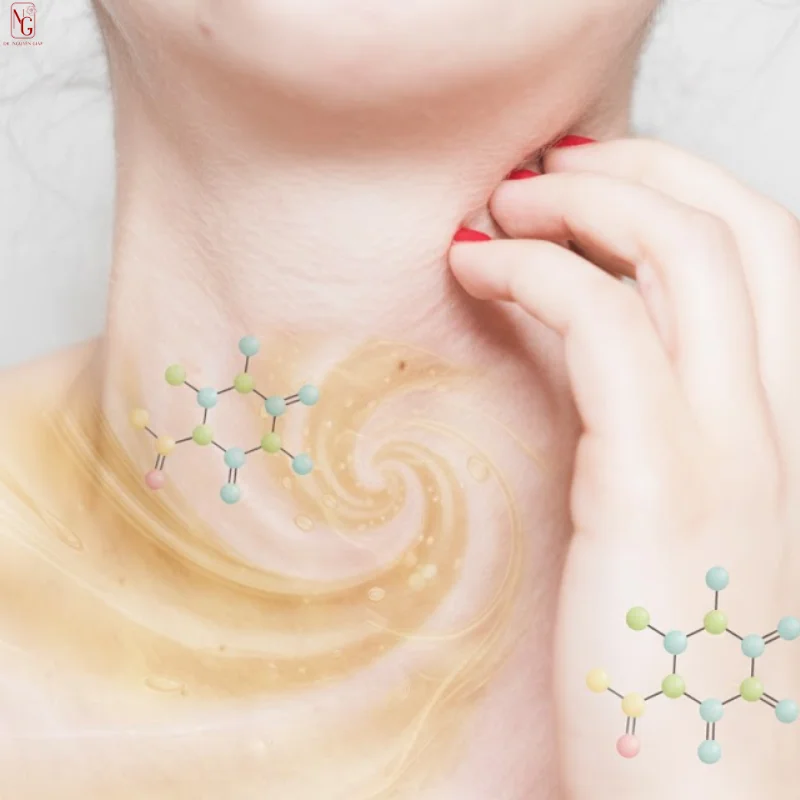
In the modern beauty industry, Glyceryl Oleate is not merely an additive used to stabilize products. It is a multifunctional ingredient that offers at least 4 core benefits for your skin. Let's analyze its mechanism of action further to see the difference.
- Firstly and most importantly, Glyceryl Oleate acts as an excellent Emulsifier. As mentioned, most skincare products, from lotions and creams to milky serums, are emulsions—a blend of water and various oils, oil-soluble vitamins, and extracts. Without a good enough emulsifier, the product would quickly separate, clump, or feel unpleasantly greasy upon application. Glyceryl Oleate helps create a smooth, consistent product structure and provides a gentle, easy glide on the skin (slip agent), making the cosmetic application experience more relaxing and luxurious.
- The second benefit, and the reason it is favored in products for dry skin, is its ability to act as an Emollient and Moisture Locker. When applied to the skin, Glyceryl Oleate forms a thin, light, breathable film on the epidermal surface. This film acts as a protective "shield," preventing Transepidermal Water Loss (TEWL). For skin that is dry and cracked due to dry weather or aging, this ingredient helps fill the gaps between flaking skin cells, making the skin surface immediately soft and smooth.
- Next, in cleansing products such as facial cleansers or shampoos, Glyceryl Oleate acts as a gentle surfactant. Unlike strong sulfate-based cleansers that can erode the skin, Glyceryl Oleate cleanses by “dissolving oil”. Its oil-loving head will absorb excess sebum and dirt accumulated in the pores, then the water-loving head will help wash them away easily when you rinse with water. As a result, the skin is deeply cleansed but still retains its natural moisture, without feeling “squeaky clean” to the point of tightness. Especially with hair, it helps hair strands become smooth, reduces friction and limits breakage.
- Finally, a lesser-known but crucial benefit is its ability to act as a Penetration Enhancer. Thanks to its skin-compatible lipid structure, Glyceryl Oleate can work as a "carrier," helping to guide other skincare active ingredients like Vitamin E, Hyaluronic Acid, or peptides deeper into the lower layers of the epidermis. Imagine it as a bus, carrying precious nutrient "passengers" past the skin's protective barrier to the exact location where repair is needed. This helps optimize the effectiveness of your entire skincare routine.
Types of Cosmetic Products that Commonly Contain Glyceryl Oleate
Due to its versatility and gentleness, Glyceryl Oleate is widely featured in thousands of different cosmetic formulations. Depending on the intended use, its concentration and combination will vary to maximize its benefits. Below are the most common product groups where you can find this ingredient.
- In Moisturizers and Lotions (Body & Face): This is the most common application. Glyceryl Oleate helps the cream have a thick yet easy-to-spread texture that absorbs quickly. Especially in product lines for dry skin repair, eczema, or aging skin, it plays a key role in restoring softness and elasticity.
- In Cleansing Products (Face Wash, Body Wash, Shampoo): You will often find Glyceryl Oleate in cream cleansers or moisturizing shampoos. It is added as a refatting agent for the skin and hair, replenishing the natural oils lost during the cleansing process, resulting in shiny hair and moisturized, smooth skin after washing.
- In Sunscreens and Makeup: One of the biggest challenges with physical sunscreens is the heavy feeling and white cast. Glyceryl Oleate helps evenly disperse UV filter particles (like Zinc Oxide or Titanium Dioxide), allowing the sunscreen to spread smoothly on the skin, creating a lightweight feel without oiliness. In lipsticks or foundations, it helps the color apply more evenly and smoothly.

Below is the quick summary to help you easily identify the role of Glyceryl Oleate in each product category:
| Product Type | Main Role of Glyceryl Oleate | Skin/Hair Sensation |
|---|---|---|
| Moisturizers | Moisture locking, softening, texture stabilization | Soft, smooth skin, non-sticky |
| Face/Body Cleansers | Gentle cleansing, moisturizing (Refatting) | Clean but still hydrated skin, no tightness |
| Shampoo/Conditioner | Surfactant, hair conditioning | Smooth, easy-to-comb hair, reduced frizz |
| Sunscreens | Helps evenly disperse pigment/UV filters | Even base, lightweight feel |
Does Glyceryl Oleate Cause Skin Irritation?

One of the top concerns of modern consumers, especially those who own lane Sensitive Skin: (Sensitive Skin), is whether this component is safe or not? The short answer is: Very safe. However, we need to go deep into scientific evidence to understand why it's safe.
Glyceryl Oleate has been assessed as safe for use in cosmetics by prestigious global pharmaceutical and cosmetic regulatory bodies, including the CIR (Cosmetic Ingredient Review) and the FDA.
The key lies in its "Biocompatibility." The structure of Glyceryl Oleate almost perfectly mimics the natural lipids present in the human skin's hydrolipid layer. Upon contact with the skin, our body recognizes it as a "familiar" component rather than a foreign intruder.
According to a study published in the Journal of Cosmetic Dermatology, Glyceryl Oleate is not only minimally irritating but also possesses the ability to soothe mild inflammatory reactions caused by dry skin.
Compared to strong synthetic emulsifiers or petroleum-based surfactants, Glyceryl Oleate is much friendlier. It is a top choice for baby products (like baby wash and shampoo) and cosmeceutical lines for skin undergoing treatment.
However, "safe" does not mean "absolutely never allergenic." In extremely rare cases, individuals with a severe allergy history to Glycerin or olive oil may experience mild reactions.
But generally, the irritation rate of this ingredient is extremely low, making it one of the most reliable foundation ingredients in the beauty industry.
Guide to Safely Choosing and Using Products Containing Glyceryl Oleate
Although Glyceryl Oleate is a gentle ingredient, intelligent cosmetic use always requires caution and knowledge. To maximize the benefits of this nutrient and ensure absolute safety for your skin, you should follow some basic principles.
- Firstly, always prioritize the source and origin. A quality product containing Glyceryl Oleate must come from a pure manufacturing process, free of contaminants. Reputable brands often clearly disclose the raw material source (often from organic plants). Purchasing unverified, floating products may expose you to low-quality or adulterated Glyceryl Oleate, reducing its efficacy.
- Secondly, never skip the Patch Test. Even though Glyceryl Oleate is safe, a cosmetic product is a complex blend of dozens of other ingredients (fragrance, preservatives, actives...). You may not be irritated by Glyceryl Oleate but might be sensitive to another accompanying substance. Try applying a small amount of the product to your wrist or behind your ear and wait for 24 hours. If there is no sign of redness, itching, or blisters, you can safely use it on your entire face.
- Thirdly, listen to your skin. If you have acne-prone skin, while Glyceryl Oleate is not highly non-comedogenic, combining it with other very heavy base oils might overload the skin. In this case, look for products containing Glyceryl Oleate but with a gel or light lotion texture. Conversely, if you have dry, aging skin, thick cream formulations containing this ingredient will be the "holy grail" for restoring your skin barrier.
- Finally, if you experience any unusual signs during use, such as prolonged stinging, redness, or rash, stop using the product immediately. Consult a dermatologist or seek specialized knowledge from reliable sources like Dr. Nguyen Giap for timely management. Understanding each ingredient like Glyceryl Oleate not only gives you peace of mind but is also the first step in a scientific and sustainable beauty journey.
Consult your dermatologist or read the in-depth knowledge from reputable sources such as Dr Nguyen Giap to handle direction timely. Understanding about each component, such as Glyceryl Oleate not only help you feel more secure, but also is the first step in journey beauty care, science and sustainable.
 English
  Vietnamese

Dr. Nguyen Giap's Assistant
Dr. Nguyen Giap's Assistant for the Dr. Nguyen Giap website, with over 6 years of experience in developing content in the fields of aesthetics.
Articles on the same topic:
What is Fractional RF (Microneedling Radio Frequency)?
What is Triethanolamine? The effects of this substance in cosmetics
Does 7 AM Sun Make Your Skin Darker?
Is Breast Tenderness a Sign of Pregnancy?
Does Cosmetic Surgery Leave Scars?
What Is Hydrolyzed Collagen?